
The Dating Optimism Paradigm
A better model and a mindset shift for dating in San Francisco

👋 I’m Paul, a software engineer who’s worked in both startups and big tech, and I’ve spent most of my adult life in San Francisco. This city is unlike anywhere else—the hills, the nature, the ambition, the people trying to build a better future (or at least a better life for themselves). After more than a decade here, I realized I’m in love with this place.
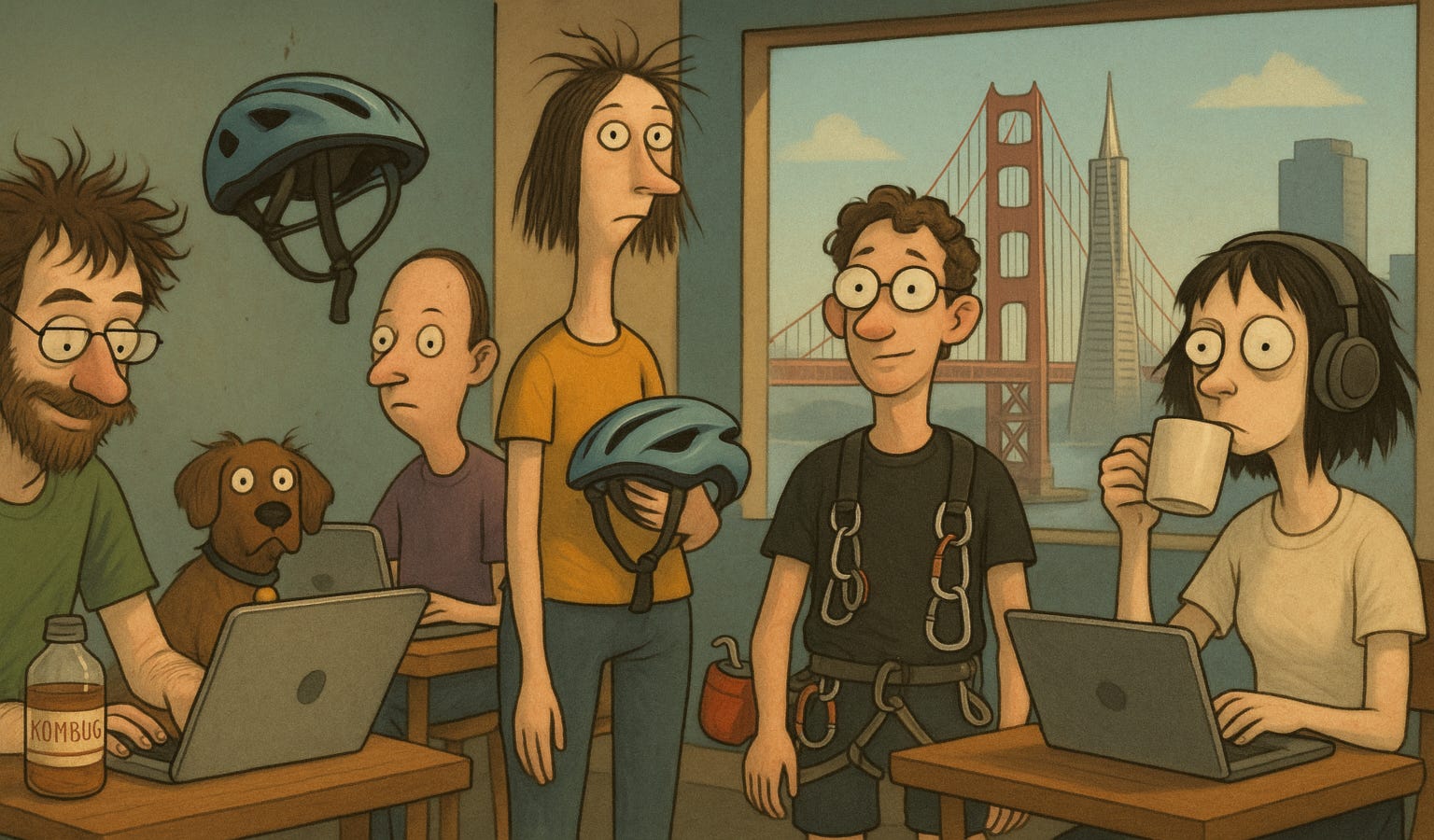
But not everyone feels that way—especially when it comes to dating. The complaints are endless. It got so bad that we made a “Tech And The City” parody. And surely, we’ve all heard, “The odds are good, but the goods are odd.”
I disagree. The goods are fine. And I have data to prove it.
The Dating Optimism Paradigm
Dating in 2025 seems to be hard for everyone. My friends—and your friends—complain they can’t find a partner, get ghosted, men won’t commit, women are flaky, techies are so immature, no one serious is left, etc. Meanwhile, I regularly meet and date incredible people—online, offline, through hobbies, work, and random events. And I’m not the only one. Some of my friends have the same experience, finding dating less draining, less daunting, and more promising.
What sets us apart? Optimism.
We believe that success is possible, so we engage with energy instead of dread. Even after tough setbacks, we pick ourselves up and try it again.
Besides, when was the last time someone was attracted to a downer?
Because Optimism Works!
The positive effects of optimism on relationship success are well documented. [Srivastava et al., 2006] reports, as described here, that
[After 1 year of dating,] about 75 percent of couples with optimistic men were still together, while [only] 54 percent of couples with nonoptimistic men were still dating.
This applies to early stages of dating as well: optimism is an important component of what makes it successful, too. [Psychology Today 2024] links optimism to “taking initiative”, “expressing affection”, and “resilience”—important traits of dating at the early stages too.
Psychologists approve. Try optimism yourself. Ask your therapist if it’s right for you.
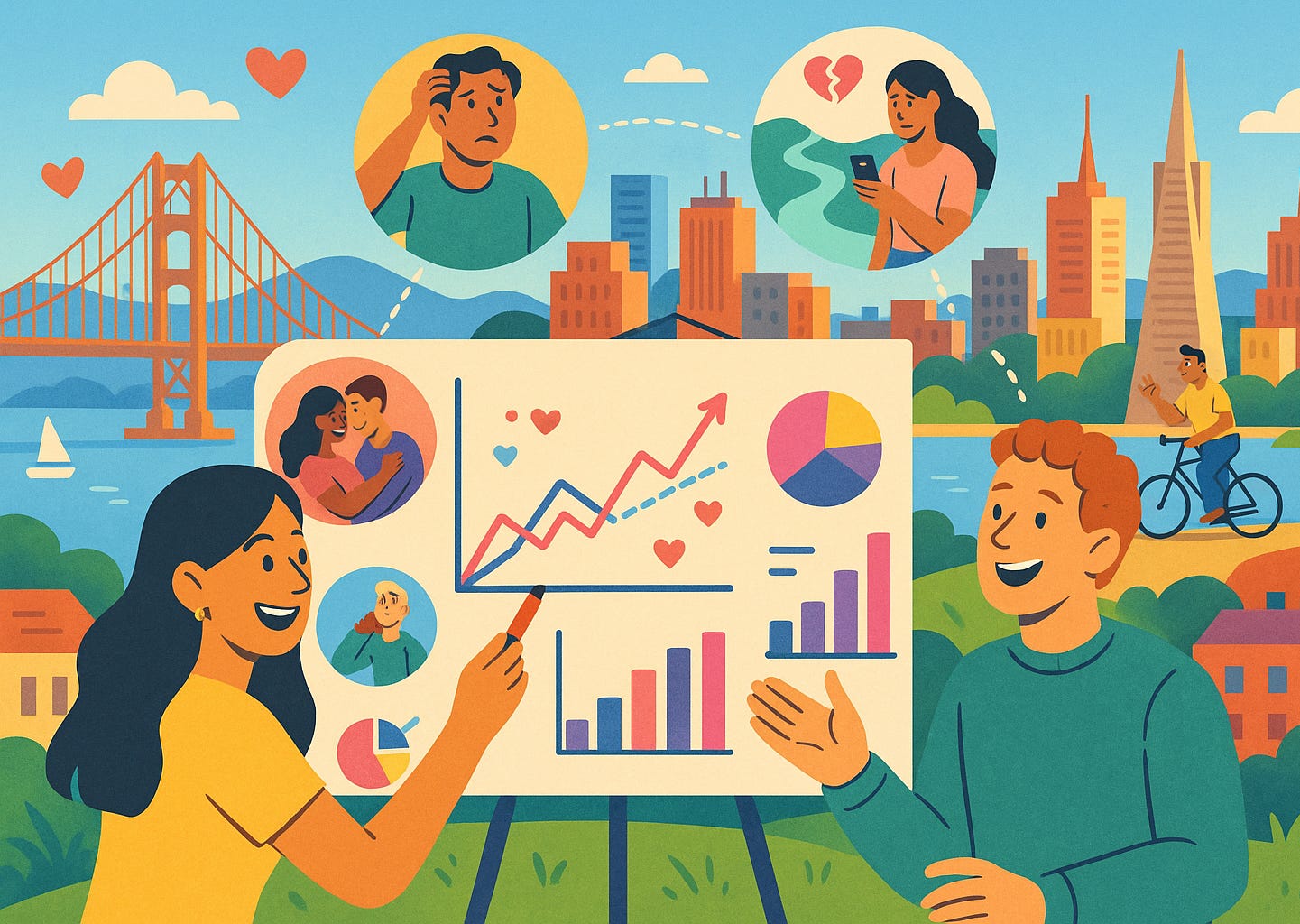
Restoring Optimism, One Graph at a Time
Optimism doesn’t come from nowhere. Built on a solid foundation of inner work, it comes from experience, evidence, and rejecting myths that make us feel doomed before we start. Confidence is already hard to cultivate, but it’s especially difficult when online culture keeps shouting that everything is hopeless.
This publication aims to dismantle those myths with data, insight, and perspective. While these results might apply elsewhere, I’ll be focusing on dating in San Francisco and the US.
San Francisco is a city with tremendous assets. It is a magnet for smart people and investment capital, has a vibrant and diverse food scene, a transit system that mostly works, relatively low crime, and international fame that draws people from all around the world. It’s a shame that we haven’t yet figured out how to make each other happy romantically.
But if we believe in ourselves, we can do it.
Optimism begets the desire to invest in the future. It wasn’t always easy for me and my friends: we did the work, used coaching and therapy, and kept putting ourselves out there. You are far more likely to work on improving your looks, your wit, and your social skills when you believe the effort will pay off.
And I’ll show you that it will.
***
Subscribe to get novel insights on dating in San Francisco and in general.
To learn more about the tech platform that powers this publication, visit Substack.com.
I’d add that dating is easier for extroverted people which then increases your dating options which then increases the likelihood you’ll meet people you like, which increases your viewpoint of an abundant mindset (optimism) over a scarce mindset (pessimism). I’d be curious to see what the stats and research shows regarding the socialableness scale as it relates to abundance/scarcity in dating. I’d wager that introverts are more likely to fall into the negative, finding dating to be significantly harder, and extroverts the positive, seeing endless possibilities. And let’s not forget, our society conditions extroversion as the more “agreeable” trait.
Refreshing read Paul! Love ur take!
There’s def truth in what you said about optimism. It’s not naivete; it’s energy. It’s what keeps people open instead of guarded, curious instead of cynical. San Francisco has this beautiful paradox - chaos and creativity, loneliness and potential - and your piece really captures that.
I also love how you back it up with data but still write from the heart. Dating (and life) here really does get better when you approach it with wonder instead of weariness. Excited to follow along, your perspective feels both grounded and hopeful, which is rare these days. 🌉 keep going!!